If you missed the earlier newsletters in the El Mirador series, part 1: The First Megalopolis and Part 2: Engineering the Swamp are available online in our Insights Archive.
The Environmental Collapse
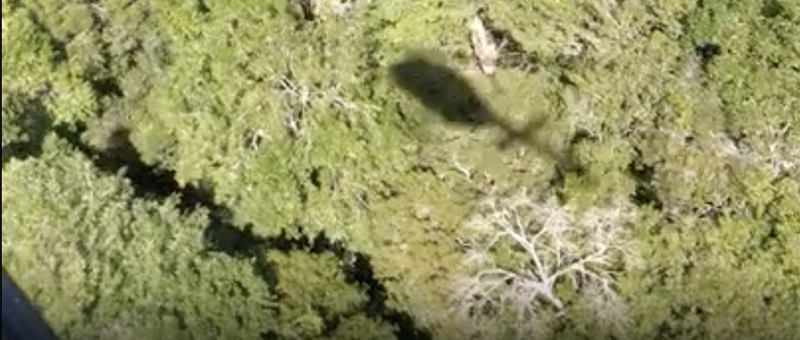
During the flight into El Mirador, the shadow of the helicopter is outlined on the scrub jungle below.
Around 150 AD, the lights went out in the Mirador Basin. The massively effective swamp agriculture that had successfully supported dense urban populations for thousands of years suddenly seized up. The timeline of the collapse is correlated with pollen samples showing massive deforestation and a sudden shift from wetland and agricultural pollens to dry scrub pollens. The sea of green you see today is a relatively recent regrowth over a landscape that was once completely denuded in antiquity.
Hansen, Richard D., et al. Climatic and Environmental Variability in the Rise and Collapse of the Pre-Classic Maya (2002).
Maya Stucco Production
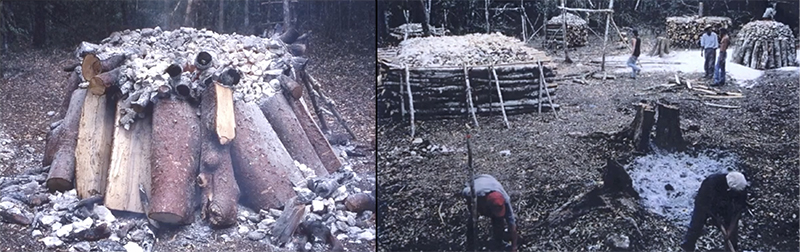
Richard Hansen, The Origins & Collapse of the Pre-Classic Maya in the Mirador Basin, Guatemala, at timestamp 1:07:25
The collapse was triggered by an environmental tipping point. The massive demand for lime stucco needed to cover miles of causeways, gigantic pyramids, and acres of plastered plazas required burning vast amounts of green wood. This deforestation led to soil erosion, which washed into the bajos (swamps), clogging the delicate system of muck and water that fed the city. When the swamps turned to clay, agriculture failed. This short video clip from our friends Jeff and Tom brings home the extent that dry scrub replaced the bajo chinampas and terraces that once had supported populations of hundreds of thousands.
Schreiner calculated a mathematics of collapse: producing just one ton of stucco required 5 to 6 tons of limestone and 5 to 6 tons of green wood. It takes roughly 10 trees to produce enough stucco to plaster one square meter of a temple. This perfectly illustrates why plastering a city the size of El Mirador became ecologically impossible to sustain. Dr. Richard Hansen estimates that producing enough stucco for the final coating of the El Tigre pyramid required clear-cutting of 1,263 acres of upland forest.
Schreiner, Thomas. "Traditional Maya Lime Production: Environmental and Social Implications." (Dissertation, 2002)
The Cost of Grandeur
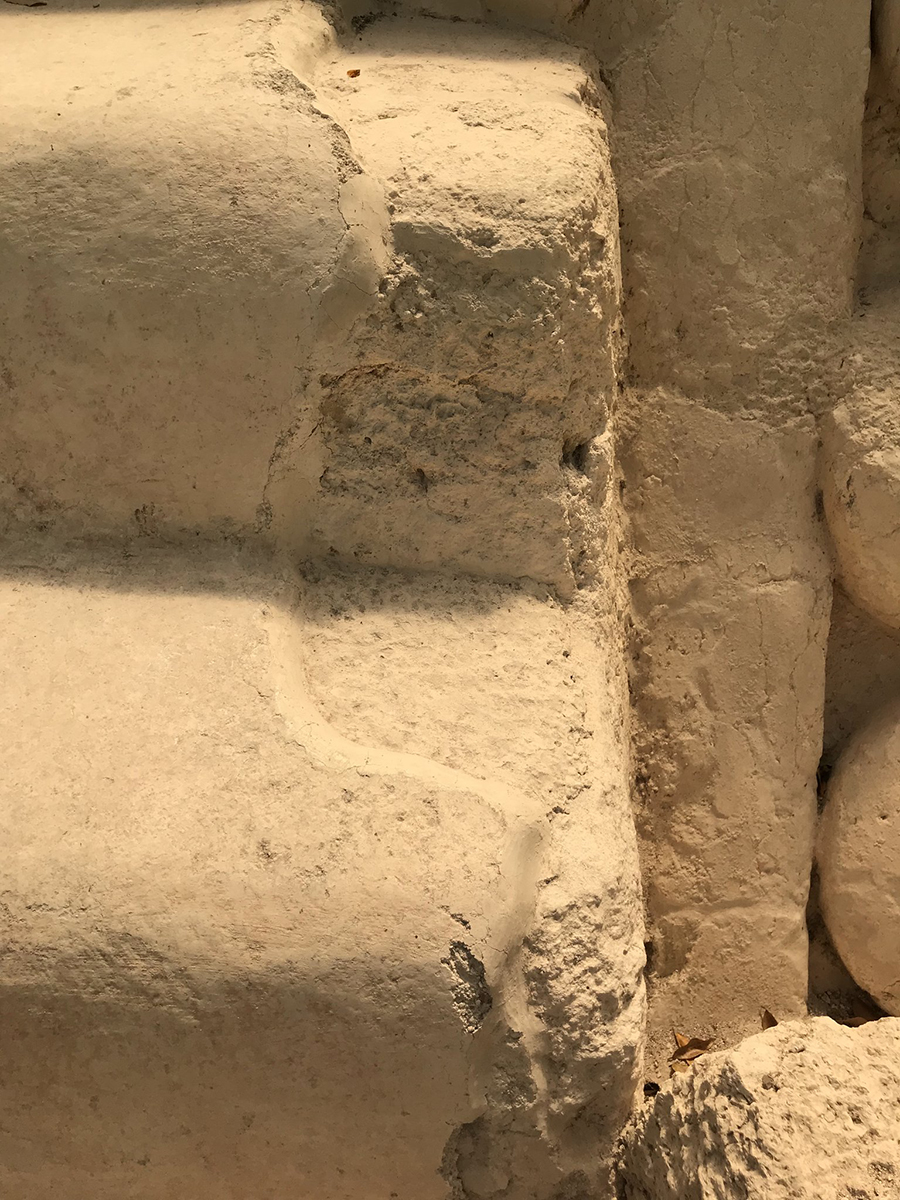
Photo courtesy of Jeff Purcell
The plaster coating on the central stair of Structure 34, built around 100 BC, is only about 5 cm thick. However, as time passed, the thickness of the coatings and plaza floors became ever more extravagant, eventually reaching up to 50 cm (about 20 inches). Hansen sees this as a massive misuse of resources and a tragic instance of conspicuous over-consumption.
Richard D. Hansen, The Beginning of the End: Conspicuous Consumption and Environmental Impact of the Pre-Classic Lowland Maya
The Evidence in the Mud
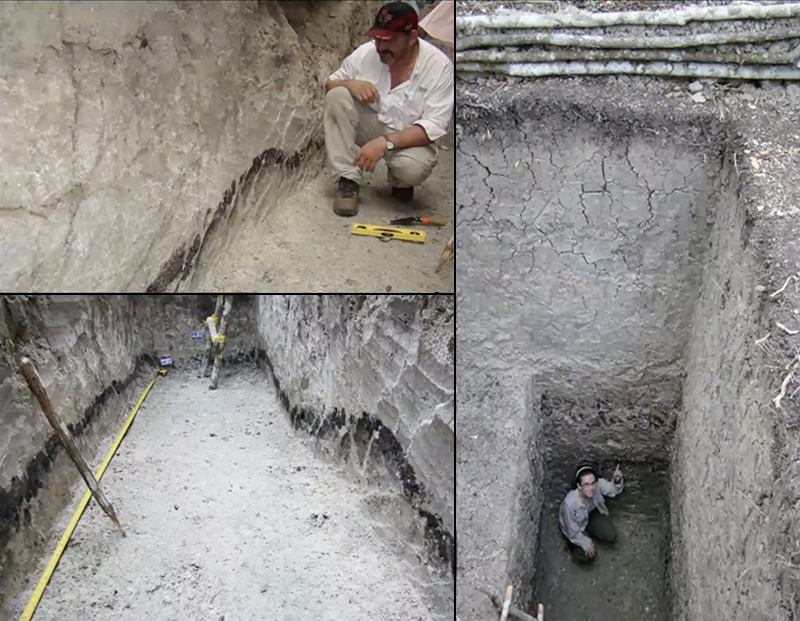
This rapid deforestation led to severe soil erosion, which washed down into the bajos (swamps), burying the highly productive swamp mud under a thick layer of sterile clay and clogging the delicate agricultural systems that fed the city. Excavations throughout the Mirador Basin reveal a distinct stratigraphic layer of light-colored clay—the “maseca” layer— sitting directly on top of the dark Preclassic peat. This is the geological smoking gun, the physical debris from deforested hillsides. When the swamps turned to clay, the chinampas (floating agricultural fields) failed, and food ran out throughout the Basin.
Jacob Hansen (Richard's son) & Wahl, David. "Sedimentation rates in the Mirador Basin." & Beach, T., et al. "Maya Wetland Agriculture."
The El Tigre Pots
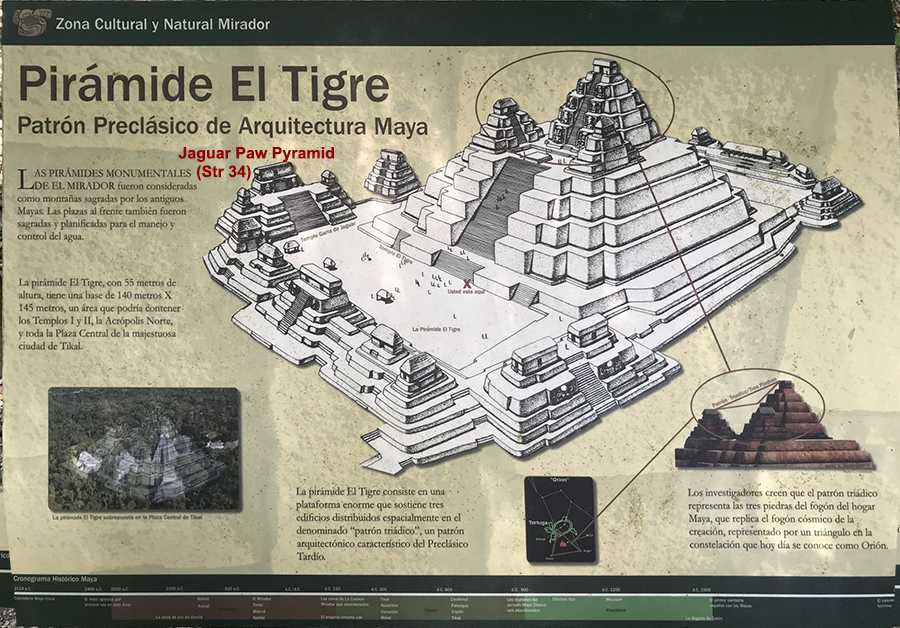
Based on a drawing by T.W.Rutledge, 12/83. Structure 34, which we will discuss next, is a small triadic pyramid to the left of El Tigre and labeled in red.
Matheny, Ray T. "Investigations at El Mirador, Petén, Guatemala." National Geographic Research (1986).
The end was abrupt. Excavations on Structure 34 in the El Tigre complex and elsewhere revealed Late Preclassic ceramics abandoned and left on the floors of temples and residential structures. As archaeologist Richard Hansen notes, the state of the ruins paints a picture of sudden, massive abandonment:
It was in the midst of a vibrant and seemingly prodigious Late Preclassic growth and development that construction ceased, monuments ceased to be erected, causeways became overgrown, monumental buildings were left with Preclassic ceramics and stone tools left directly on the floors, and the area largely abandoned. This sudden abandonment took place around 150 AD.
By every indication, a major demographic demise of monumental proportions had occurred throughout the Mirador Basin. Excavations of the large public architecture in major sites, smaller settlements scattered throughout the area, as well as small residential structures away from the civic centers of the sites revealed Preclassic artifacts in situ [in their original position] on floors, suggesting that a major abandonment had occurred not only within the major centers of the basin but also among rural residences and isolated small settlements located as much as 40 km from the major sites.
For a deeper look at the specific evidence found on the temple floors (including the "strange skeletons" and pottery), this lecture by Dr. Richard Hansen covers the exact moment of collapse (at timestamp 1:02:28).
Matheny, Ray T. "Investigations at El Mirador, Petén, Guatemala." National Geographic Research (1986).
The Ghosts in the Ruins
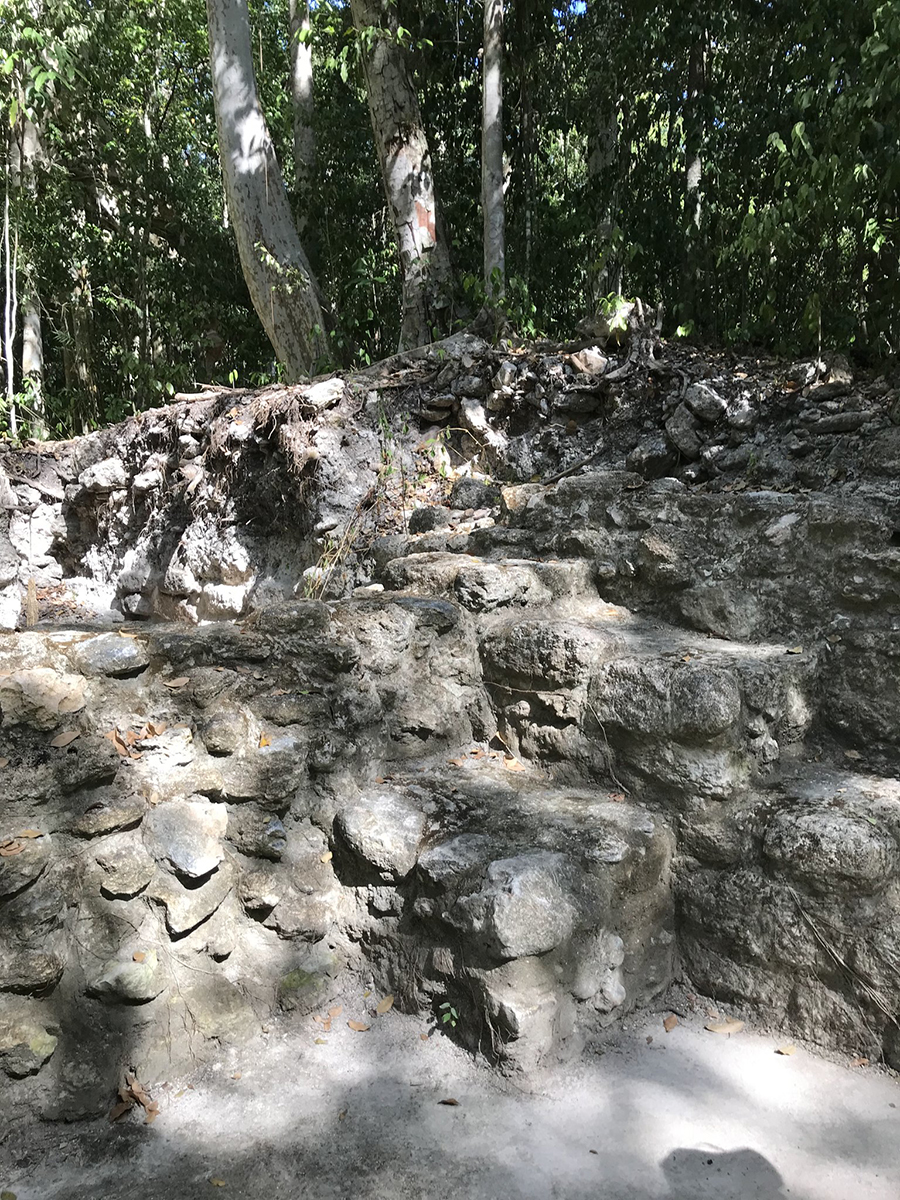
Photo courtesy of Jeff Purcell
However, El Mirador did not stay empty forever. Centuries after the collapse, small groups returned to the ruins during the Late Classic—around 700 AD. These returning inhabitants were not pyramid builders; they lived in modest thatch huts nestled among the overgrown mountains of stone. Yet, despite their humble dwellings, they were artists of the highest caliber.
Stone Ancestor Portraits
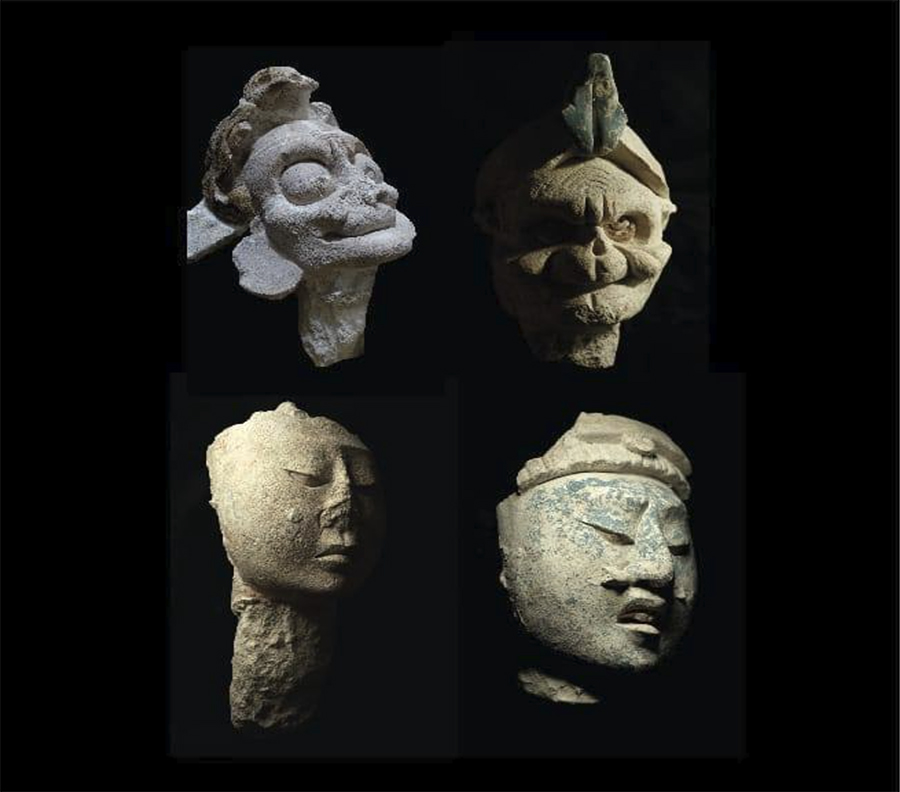
The people settling among the ruins affixed stone portraits of the imagined ancestral residents of El Mirador to their buildings. They lived in the shadow of the fallen giants, recording the myths of a lost golden age. And they not only made portraits of ancestor figures, they also created a unique style of painted pottery which was produced only in the Mirador Basin in the Late Classic period.
Scribes Among the Ruins
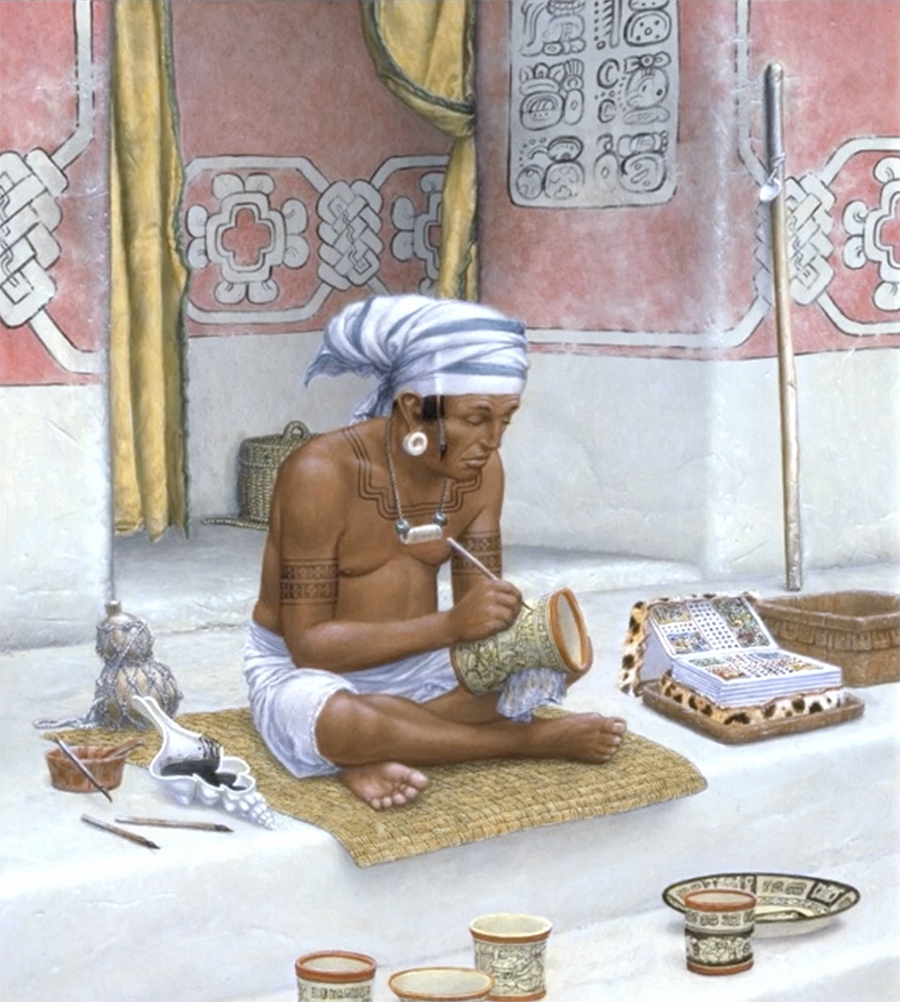
Richard D. Hanson, Cultural and Environmental Components of the First Maya States: A Perspective for the Central and Southern Maya Lowlands, Chapter 8.
Known as the “Codex Scribes,” these Late Classic inhabitants of the Mirador Basin produced some of the finest ceramics in Maya history. The “Codex Style” pottery is characterized by fine black lines painted on a cream background, specifically designed to mimic pages of Maya books, which were screen-fold books made of bark paper and bound with jaguar skin. In the deserted precincts of the ancient cities, they recorded the myths of a lost golden age. As noted by Dr. Dorie Reents-Budet:
Meanwhile, the occupants of many of the abandoned Preclassic sites during the Late Classic period included artists and scribes, living in modest structures, who produced the unique codex-style ceramics that they exported to other sites within the Basin as well as to Calakmul. They present detailed supernatural and mythological scenes in finely painted lines on bowls, plates, and vases. But they also record a fascinating sequence of kings believed to be the dynasty of the Preclassic Kan (Snake) rulers, who once presided over the first state-level polity in the Maya lowlands.
Dorie Reents-Budet, Codex-Style ceramics: New Data Concerning Patterns of Production & Distribution
The Painted Kings List
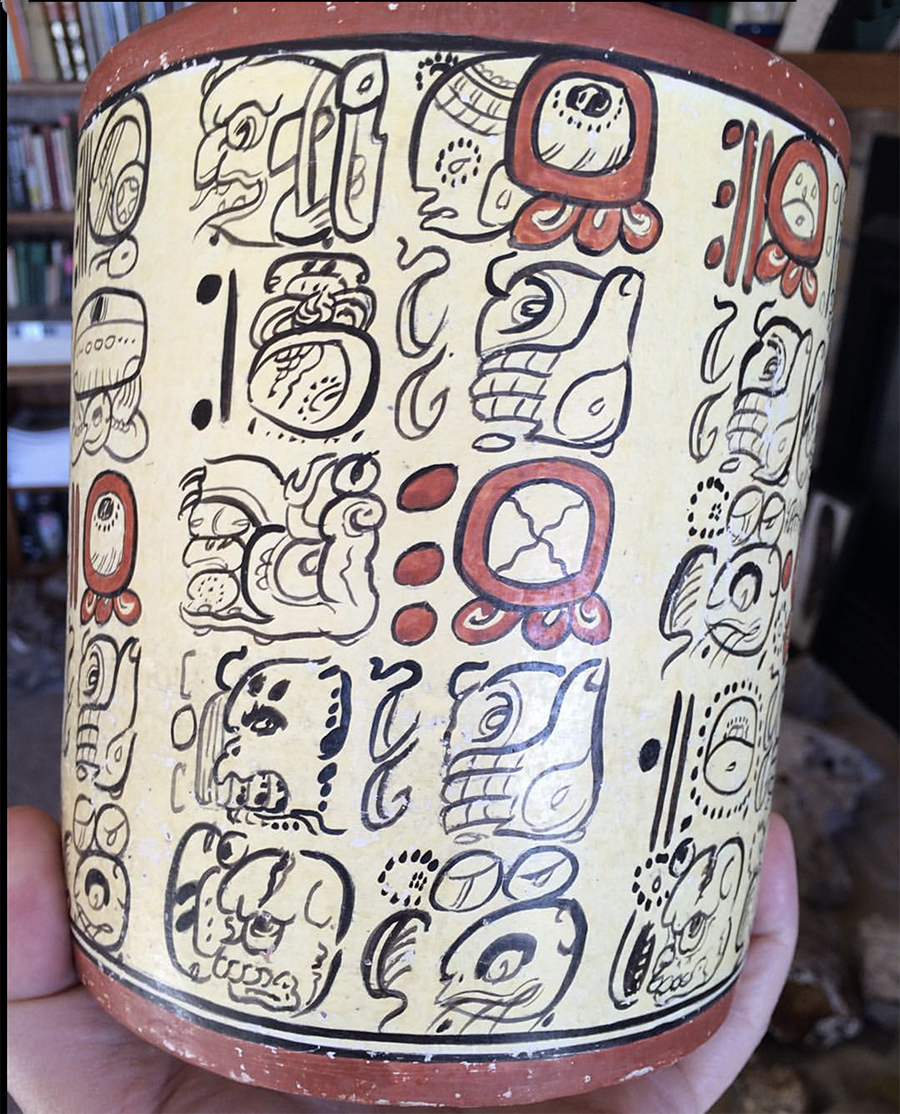
Among these codex-style ceramics are the “Dynastic Vases” of the Kanu’l (Snake) dynasty, which list 19 kings and their accession dates. The artists utilized a specific dating style mirroring the calligraphic aesthetic of Maya folding-screen books, relying on the Calendar Round: a Tzolk’in (260-day ritual count) and a Haab’ (365-day solar count). On many pots, the Tzolk’in day sign is highlighted in red, mimicking traditional red-and-black ink styles.
Because these dates focus on recurring ritual cycles rather than the precise Maya Long Count, scholars have debated how to anchor this “Kings List” in historical time. Richard Hansen argues that the list records the dynastic succession of the Preclassic El Mirador kings. If this hypothesis is correct, the dates on the Kings List should begin in 392 BC in the Maya Pre-classic. Ruler 14, Great Fiery Jaguar Paw, would therefore have ruled from 152 BC to 145 BC—more than 800 years before the scribes painted his name on pots around 700 AD.
This centuries-long gap highlights a deep reverence for the past. Reents-Budet explains this connection:
Yet the ceramic and epigraphic data imply a special socio-political and perhaps ideological relationship between the dominant Late Classic site of Calakmul and the seemingly lesser power centers [by then] in the Mirador Basin. Codex-style pottery represents the specific ceramic expression of sites in the Basin, especially Nakbé... Perhaps the pottery style makes reference to the Basin’s ideological positioning as a place of sacred origin, the power and prestige of the massive Preclassic center of El Mirador remaining in the collective memory of the region’s Classic Period descendants. Following this line of inquiry, codex-style pottery emerges as a signifier of the ancient political and ideological claim to power that underlay the authority of Calakmul’s ruling dynasty.
Dory Reents-Budet, Sylviane Boucher, Yoly Palomo, Ronald L. Bishop, and M. James Blackman, Codex-Stye Ceramics: New Data Concerning Patterns of Production and Distribution, p. 9-10
Note: For the other side of the argument which attempts to place the kings in the Early Classic period in Dzbanche and Calakmul, see: David Stuart, Secrets of the Painted King List: Recovering the Early HIstory of the Snake Dynasty (Dzibanche & Calakmul)
Note: Video of Dr Richard Hansen Explaining the Glyphs of the Pre Classic Maya Kings List is a “must see!”
Great Fiery Jaguar Paw
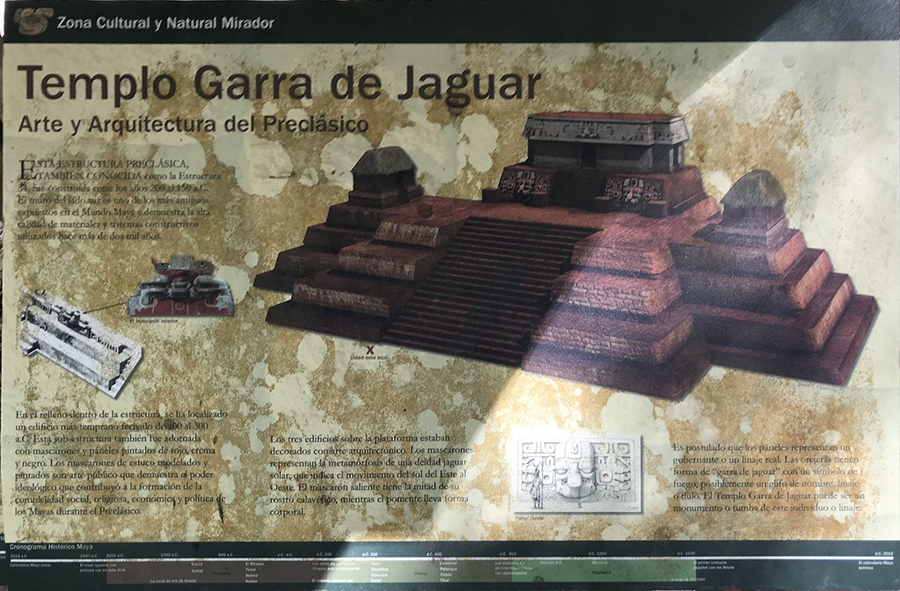
Photo of sign at site. Photo courtesy of Jeff Purcell
The inclusion of Great Fiery Jaguar Paw as Ruler 14 in the codex pottery Kings List has a intriguing connection to the physical ruins of El Mirador. As part of the El Tigre complex, Structure 34 is a small triadic pyramid built around 100 BC that remains one of the oldest standing structures in the Maya world. A pair of huge masks flanks its stairway, their ear spools decorated with huge jaguar paws. Archaeologists believe this marks the temple as belonging to Great Fiery Jaguar Paw himself, ruler 14 of the Kings List.
Hansen, Richard D., Excavations in the Tigre Complex, El Mirador.
Guenter, Stanley, The Pre-Classic Serpent Kingdom
The Jaguar Paw mask then and now
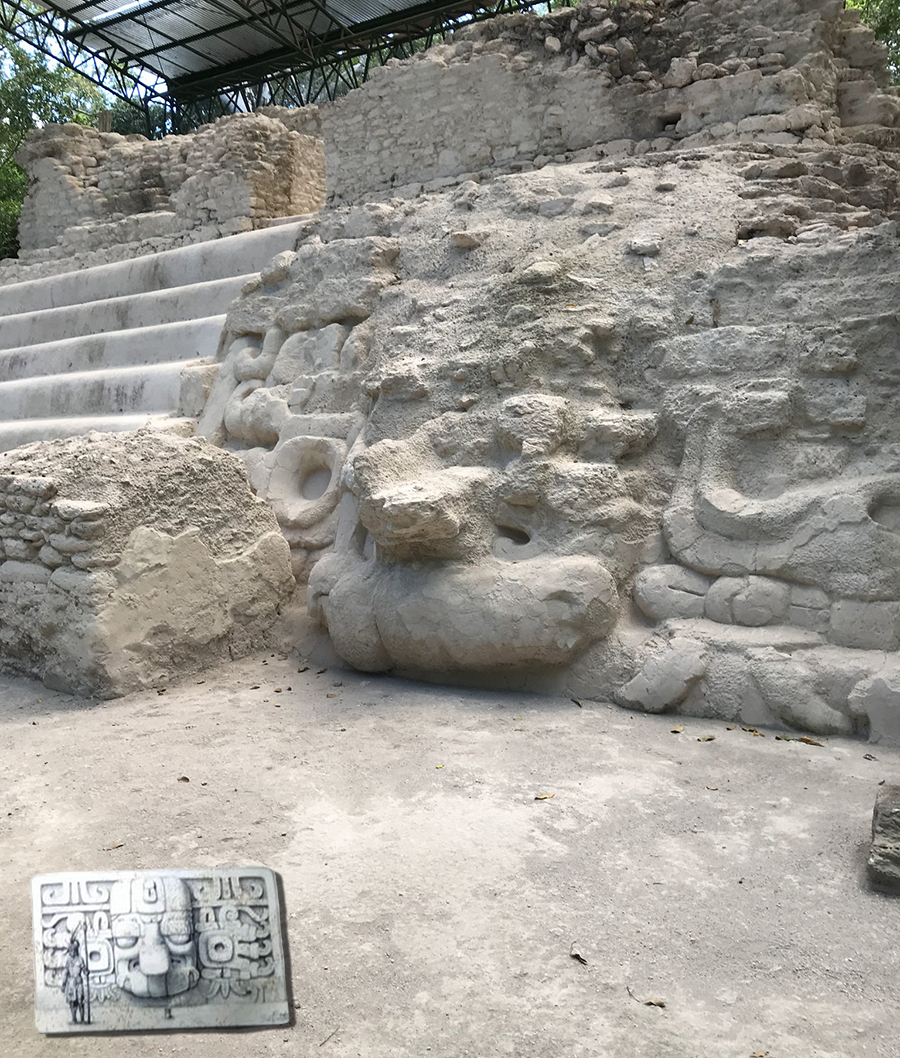
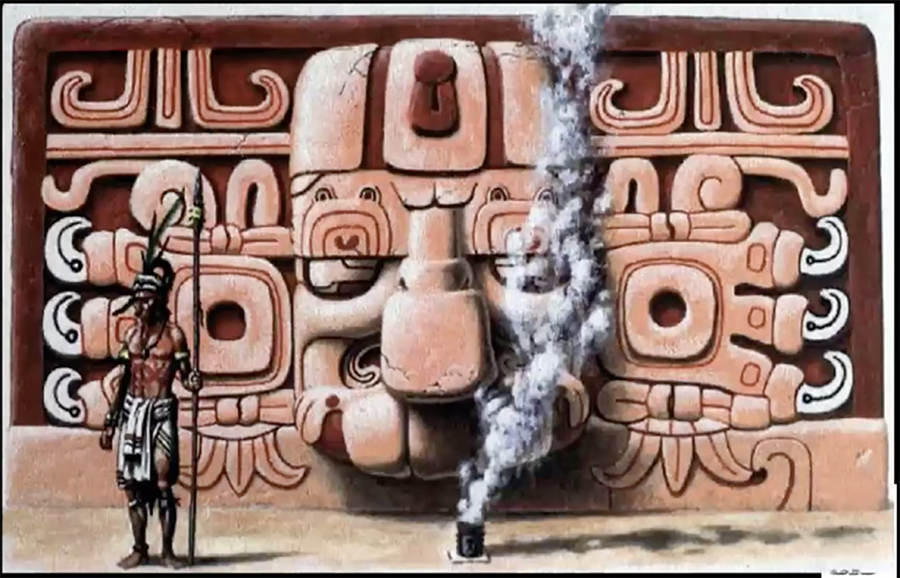
A pair of huge masks with jaguar paw ear plugs flank the stairway. An artist's reconstruction of the mask is attached to the bottom of the photo. The reconstructed mask, showing the original painted colors, clearly shows the giant jaguar paws ear spools of the mask, linking this temple to ruler 14 of the pottery Kings Lists.
Paw to the right of stair
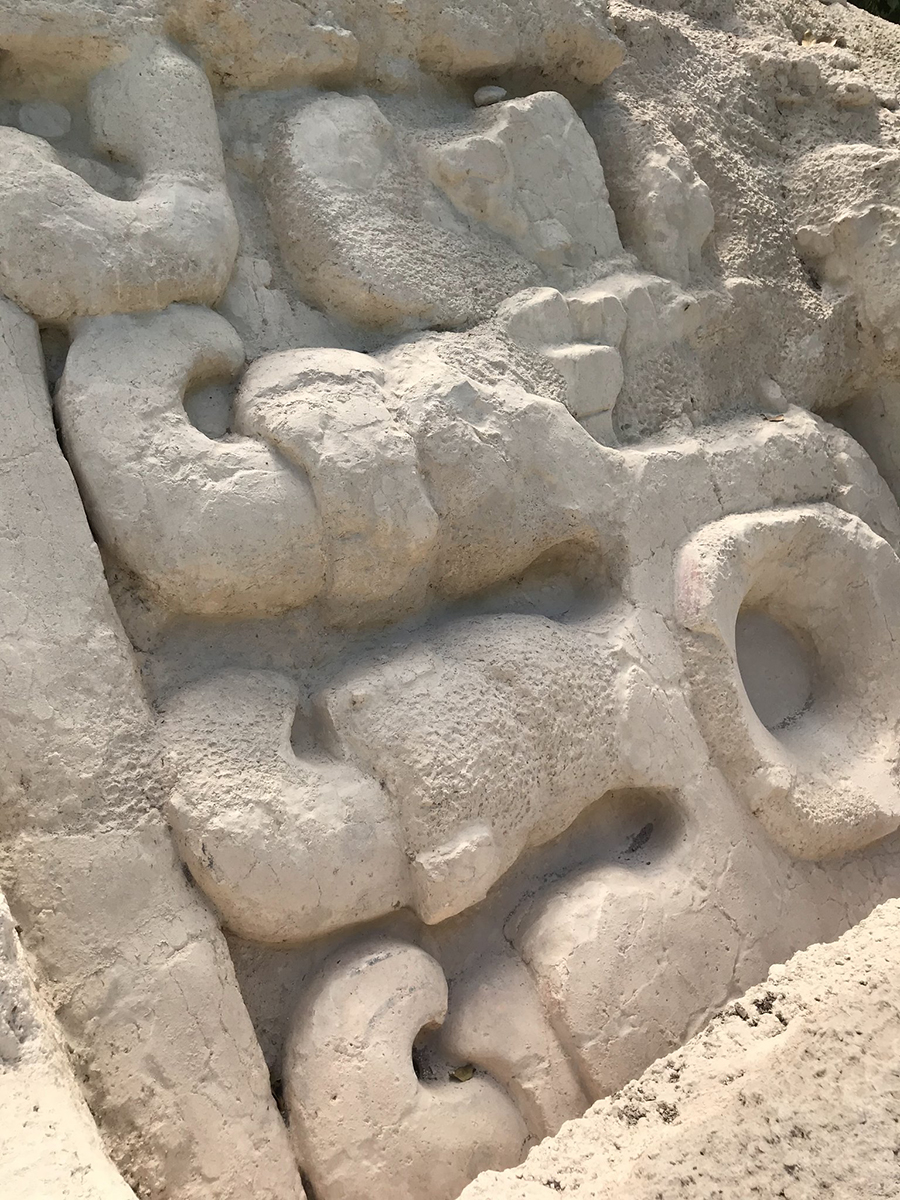
Photo courtesy of Jeff Purcell
Paw to the left of stair
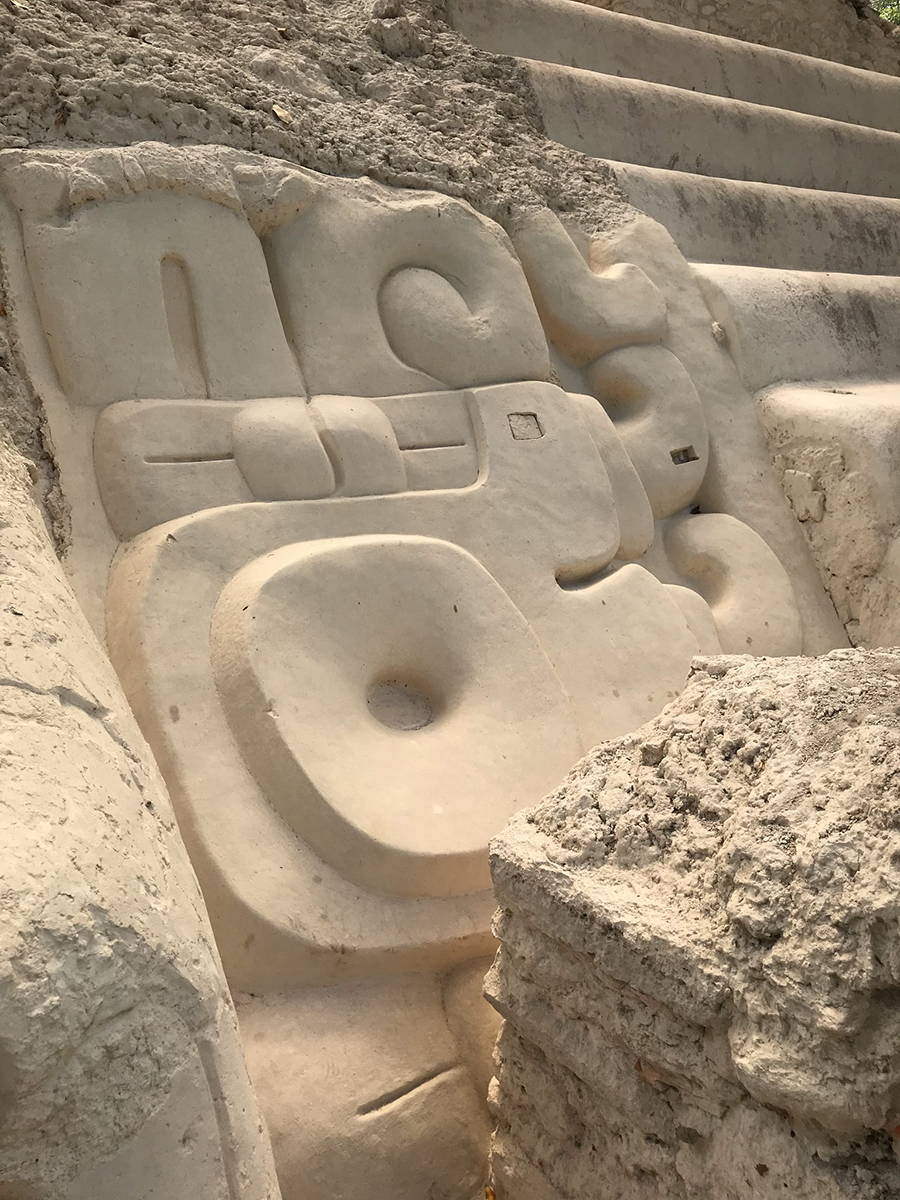
Photo courtesy of Jeff Purcell
The Temple Then & Now
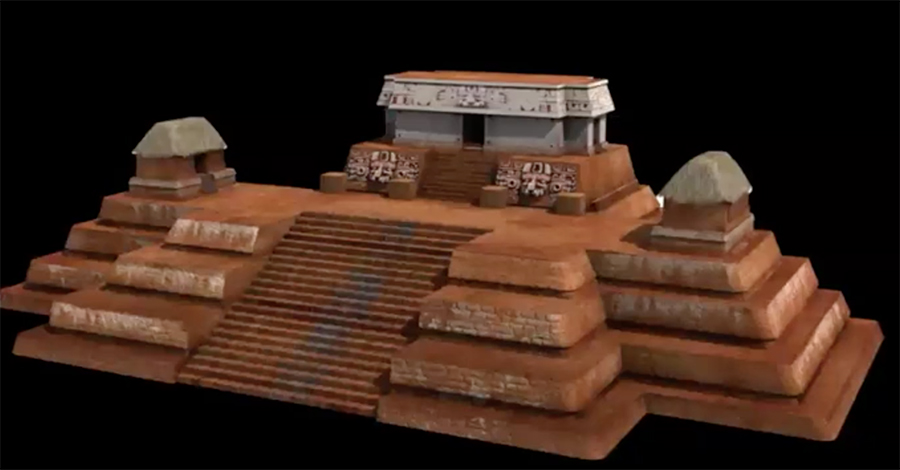
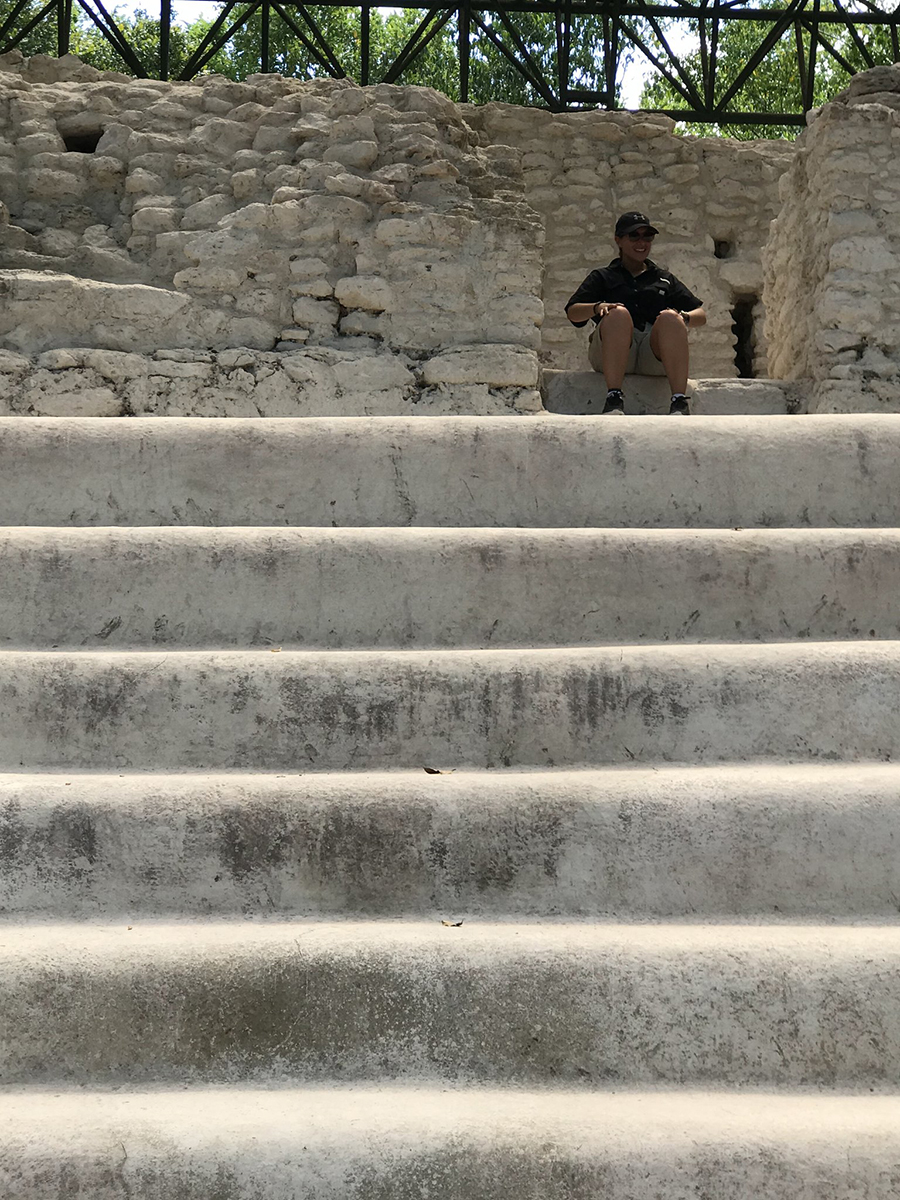
Photo courtesy of Jeff Purcell
The name “Jaguar Paw” (Yich’ak K’ahk’) would later become famous as the title of powerful dynastic rulers at both Tikal and Calakmul. Hansen suggests Structure 34 may be the ancestral shrine of those lineages. Epigrapher Stanley Guenter and others have linked the Yich’ak K’ahk’ name to these later dynastic titles, supporting the “Ancestral Home” theory: the great kings of the Classic period did not appear out of nowhere, but claimed descent directly from the Preclassic rulers of the Mirador Basin.
The reconstruction above shows the red paint of the original structure. Hansen argues that the “blood-red” coating was not merely decorative but was a technological necessity. The red pigment was derived from iron hematite, which acts as a natural fungicide, bactericide, and sealant to protect the stucco from water and biological damage.
Hansen’s team conducted chemical analysis of the plaster layers at sites like Nakbe and El Mirador to confirm the presence of high-concentration iron oxide specifically in the outermost “sacrificial” layers of the stucco. These details support the “Functionality of Form” narrative that Hansen champions—that Maya aesthetic choices were often rooted in sophisticated environmental engineering.
The El Mirador Snake Emblem Glyph
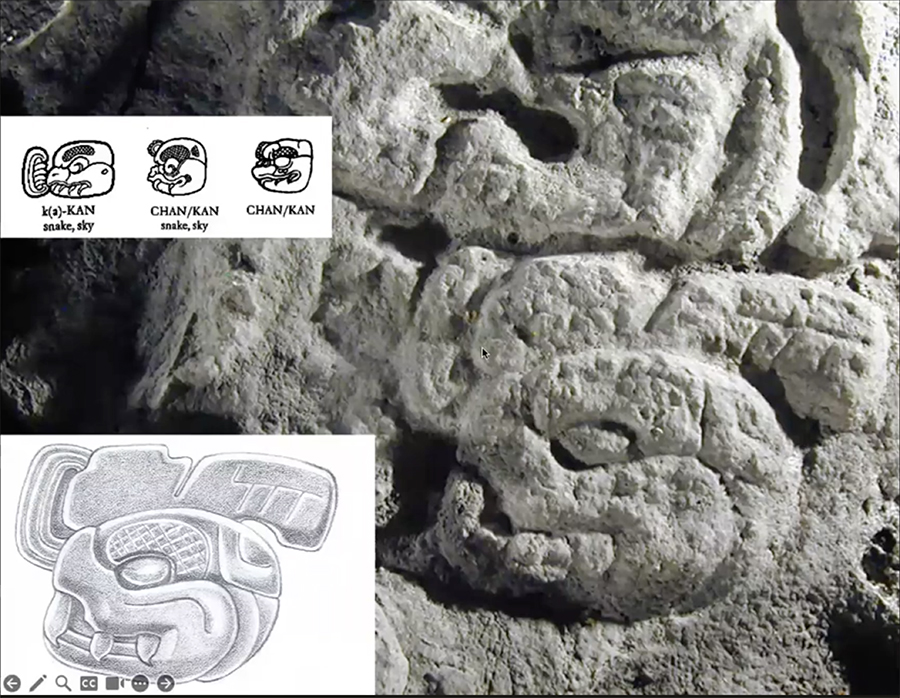
A bedrock carving from La Muerta, a suburb of El Mirador just 3 miles from the city center, depicts the earliest known version of the 'Kaan' (Snake) Emblem Glyph, suggesting the dynasty's origins in the Mirador Basin."
During the Late Classic period, Calakmul was the seat of the powerful Snake Kings. However, there is increasing evidence that the original Snake polity was actually the Preclassic Mirador Basin superstate centered in El Mirador.
Supporting this is the snake glyph found at La Muerta, a suburb just three miles from the El Mirador city center. Here, a bedrock carving depicts the earliest known version of the Kaan (Snake) Emblem Glyph. While Calakmul is famous as the seat of the Kaanul Dynasty during the Late Classic, this early glyph suggests the lineage originated centuries earlier in the Mirador Basin.
When the Mirador system collapsed around 150 AD, it appears this ruling elite did not simply vanish. Instead, they migrated north, carrying their ancient title first to Dzibanché and eventually to Calakmul, where they would rise again to dominate the Maya world.
For more evidence that the greater Mirador superstate was called The Kingdom of the Snake and its rulers were known as the Snake Lords, see Richard Hansen's lecture, The Origins & Collapse of the Preclassic Maya in the Mirador Basin, Guatemala (at timestamp 0:54:28).
Dr. Richard Hansen on site
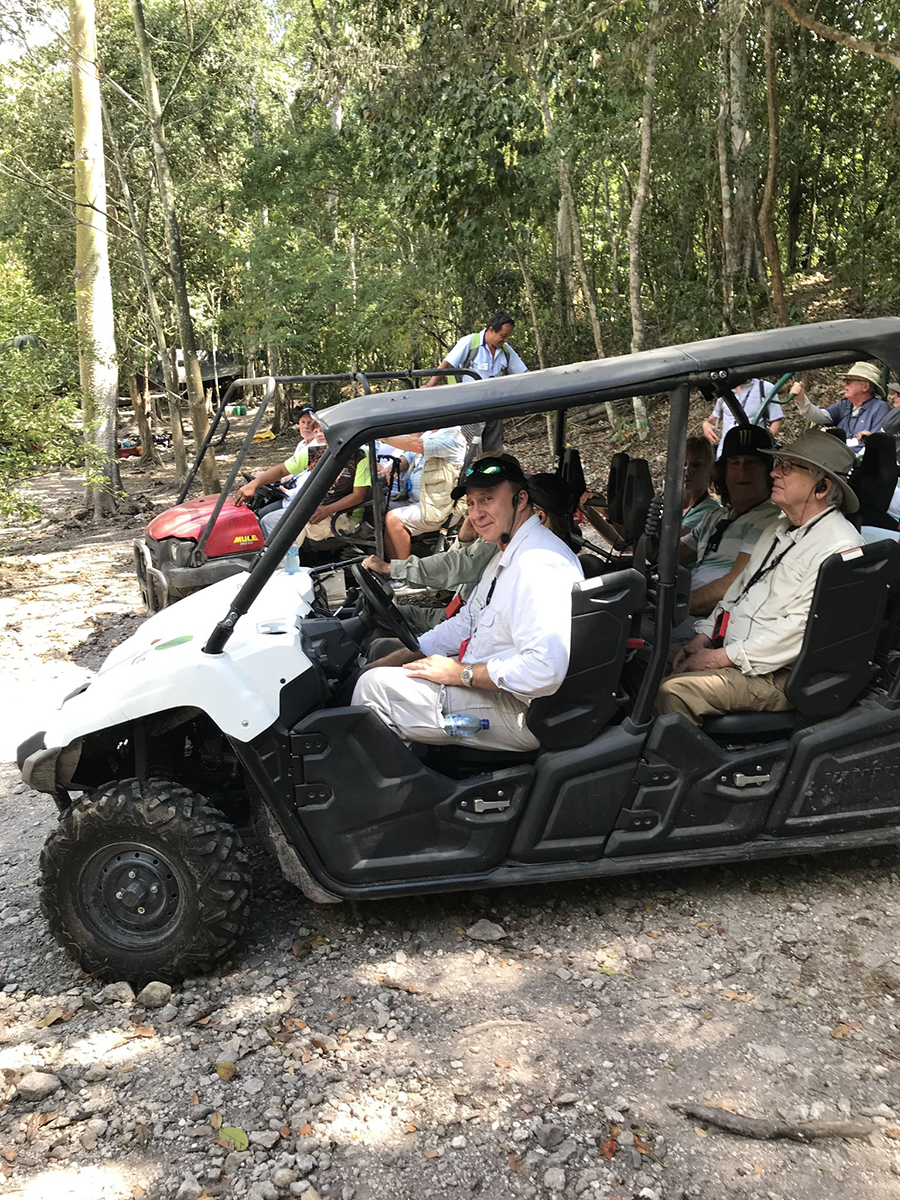
Photo courtesy of Jeff Purcell
Dr. Hansen's ongoing work in the basin continues to reveal the scale and nature of the Mirador Basin as well as its Pre-Classic collapse, and to investigate the origins of the Snake Kings.
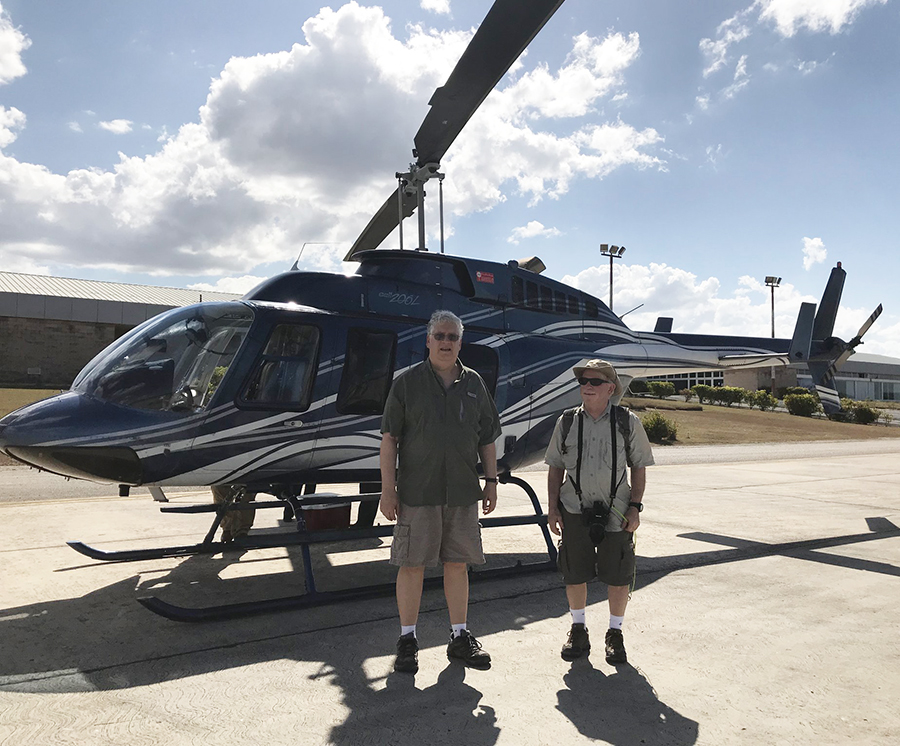
Here our friends Jeff and Tom arrive back in Flores after their trip to El Mirador. Jeff provided many photos for the El Mirador newsletters as well as the videoclip of the helicopter flight to El Mirador. Thank you Jeff!
Our April and May 2026 issues, Calakmul 1: Kingdom of the Bat, and Calakmul 2: Kingdom of the Snake, will follow the story of the Snake Kings to Calakmul and the establishment of a new Snake Kingdom which traces its origin to the El Mirador superstate and claims inheritance of El Mirador’s ancient prestige and power.
We welcome questions, comments, photos, travel stories, & other musings, and will share selected contributions in the April 2026 Newsletter.