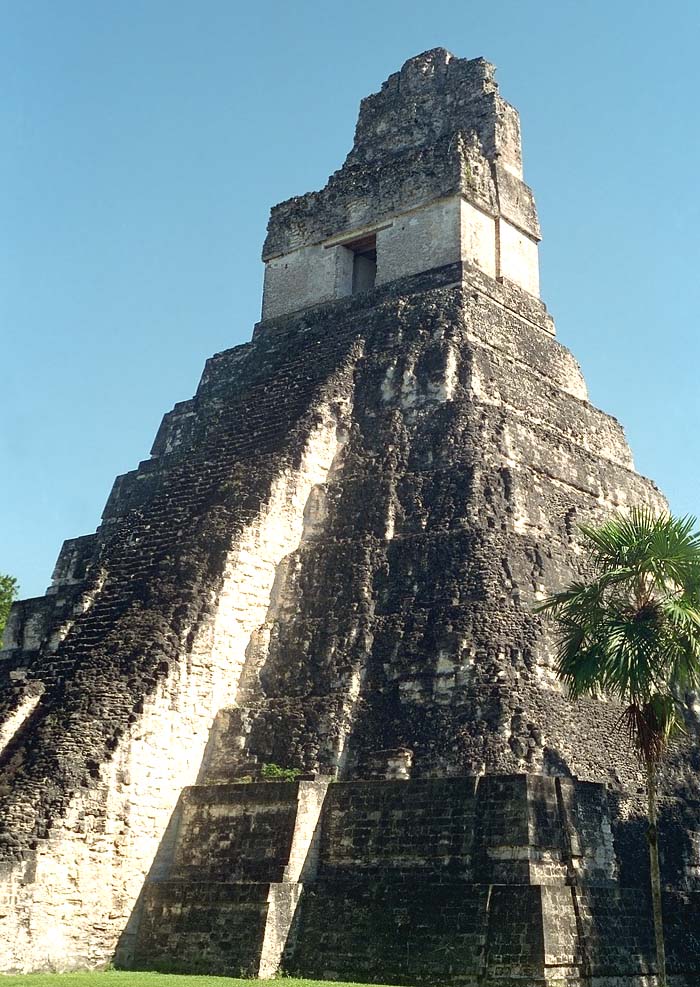
The Iconic Temple I
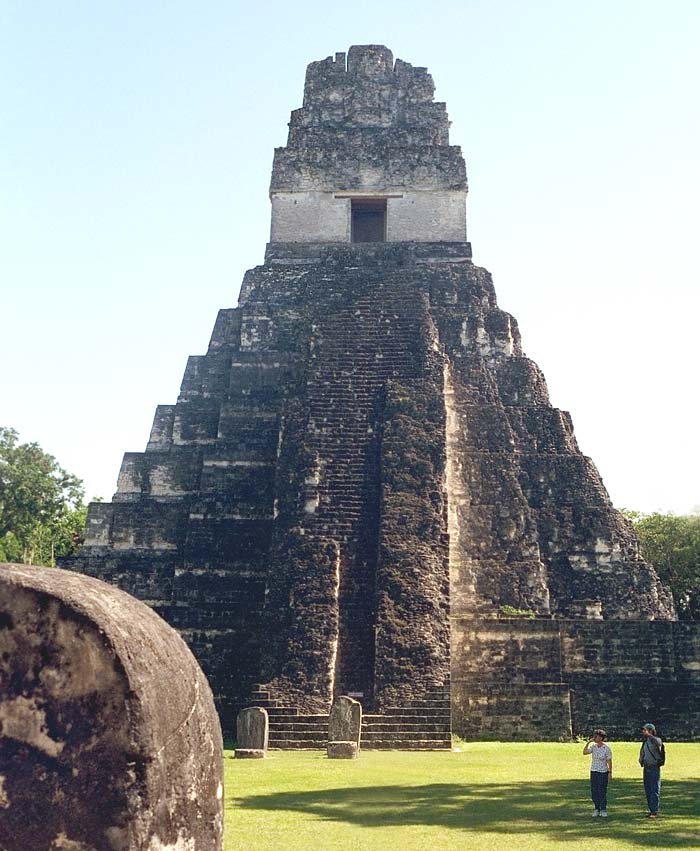
It is believed that the high roofcomb was once decorated with a seated sculpture of Jasaw Chan K'awil enthroned in splendour.
Martin & Grube, Chronicle of the Maya Kings and Queens, p. 47
home : : : map : : : inner-map
Temple 1 as it was in 1890-1891
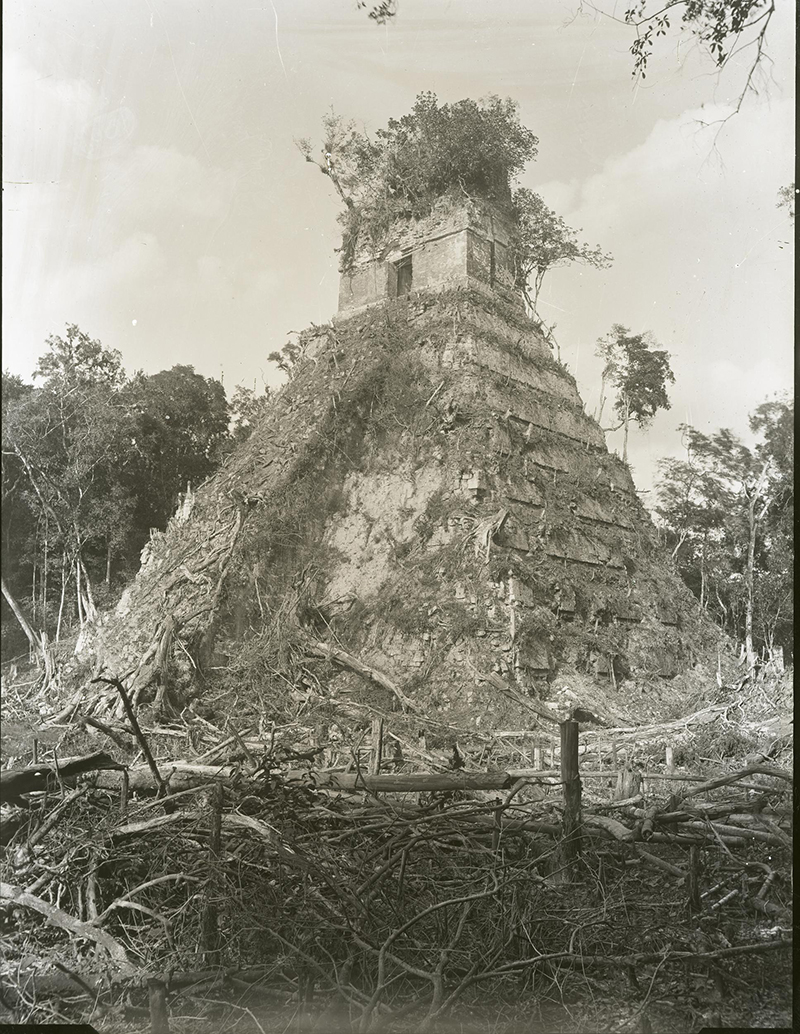
From the Maudslay Collection, British Museum. Used with permission under the CC BY-NC-SA 4.0 non-commercial license. ©The Trustees of the British Museum.
This photo of Temple I was taken shortly after Alfred Maudslay had it cleared of encroaching jungle during his Tikal expedition of 1890-91. Since then, it has captivated the popular imagination and come to epitomize classic Maya architecture.
home : : : map : : : inner-map
Jasaw Chan K'awiil's tomb under temple I
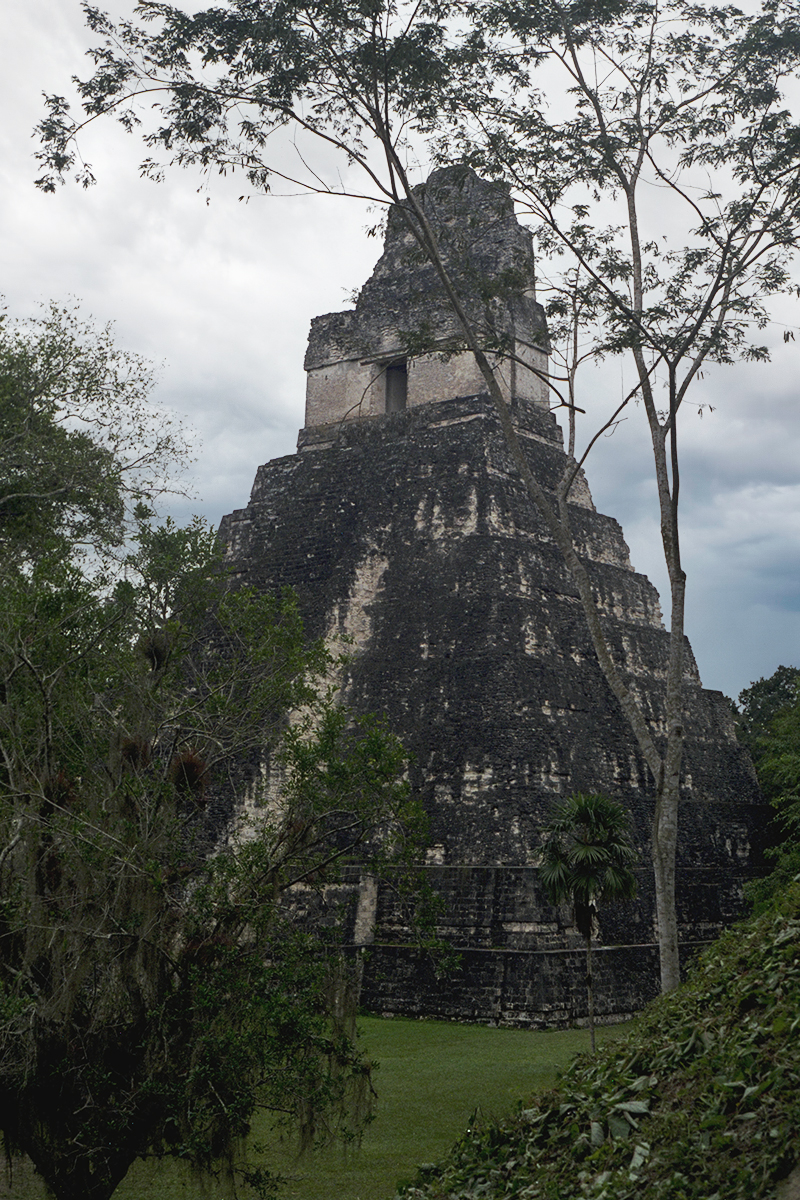
Temple I, the funerary shrine of Ah Cacau [now referred to as Jasaw Chan K'awil], was built after his death, probably under instructions he gave to his son and successor, Yax Kin Caan Chac [Yik'in Chan K'awil]. Ah Cacau's tomb was discovered underneath the shrine, north of the centerline of the pyramid, in 1962. On its summit is a three-room temple surmounted by a huge roof comb portraying the ruler seated on his throne; this temple undoubtedly served as his mortuary shrine."
Robert Sharer, The Ancient Maya, 160-163.
home : : : map : : : inner-map
Looking up at the ceremonial platform
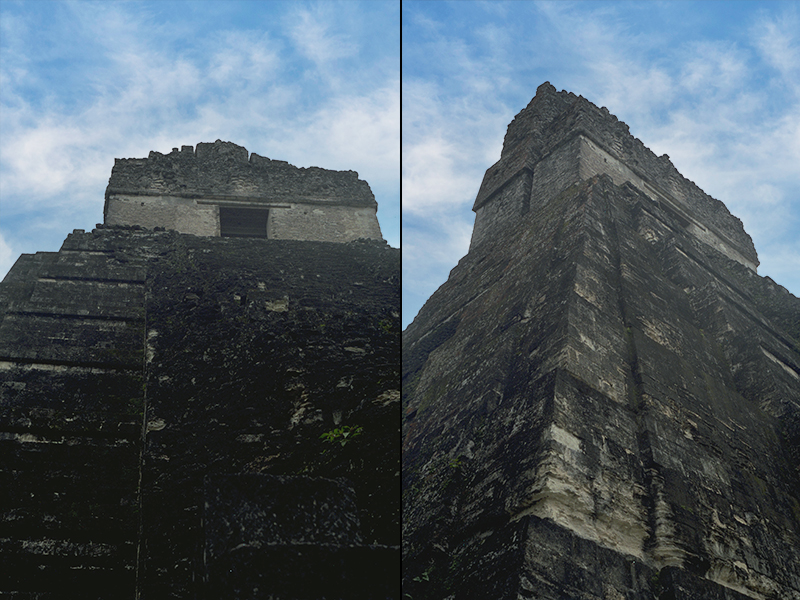
A series of stacked platforms creates the pyramid effect, which is most easily seen on Temple I with its nine platforms and elegant proportions. From below the temple itself appears to be in the heavens.
Peter Harrison, The Lords of Tikal, p. 116
NOTE: In Maya mythology, there were nine levels of the underworld, which correspond to the nine platforms of the pyramid.
home : : : map : : : inner-map
Temple I rises 154 feet above the Plaza