Stela 4: the king as ballplayer
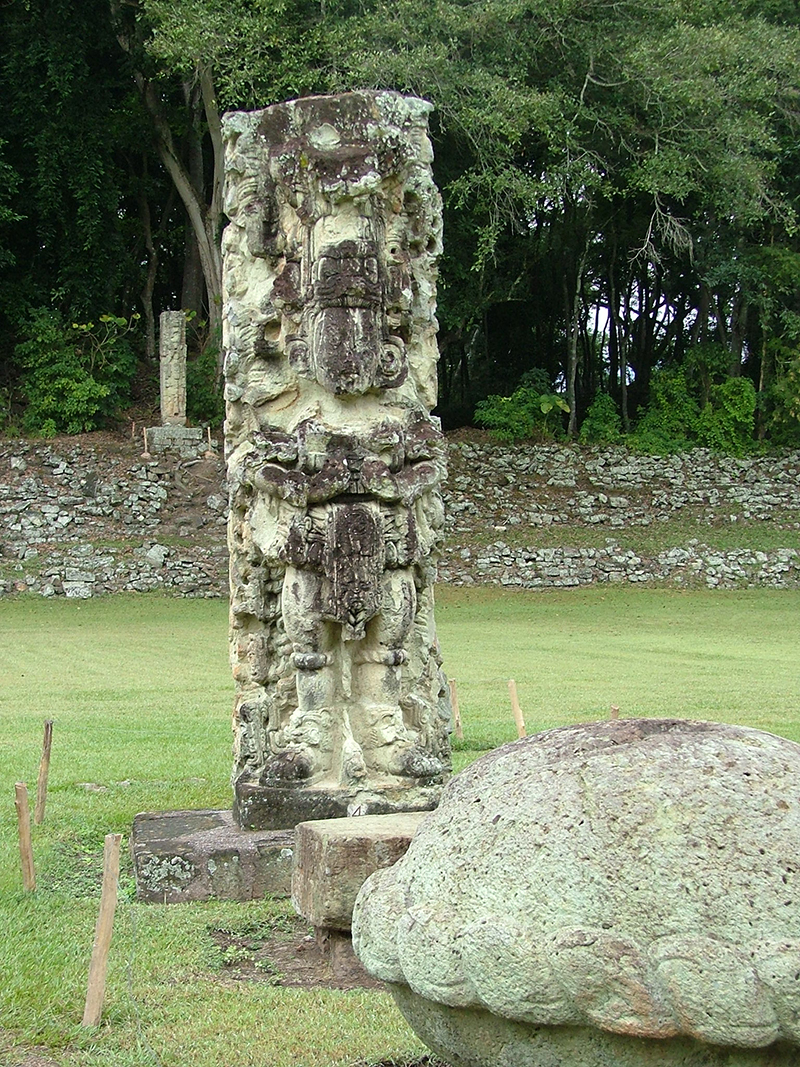
Stela 4: Dedicated September 13, 726 A.D. or 9.14.15.0.0 11 Ahau 18 Zac Maya longcount date
Both Stela 4 and Stela F portray Copan’s ruler Waxaklahun-Ubah-K’awil as a ballplayer. The principal altar for Stela 4 depicts a flattened sphere bound by a twisted cord. Similar objects appear on the markers from Ballcourt IIb, where we can identify them as rubber balls still hanging from a binding rope tied to the rafters of a house. The Maya apparently stored their rubber balls in this way to keep them round.
Linda Schele & Peter Mathews, The Code of Kings: The Language of Seven Sacred Maya Temples and Tombs, p. 152
18-Rabbit in ballplayer costume
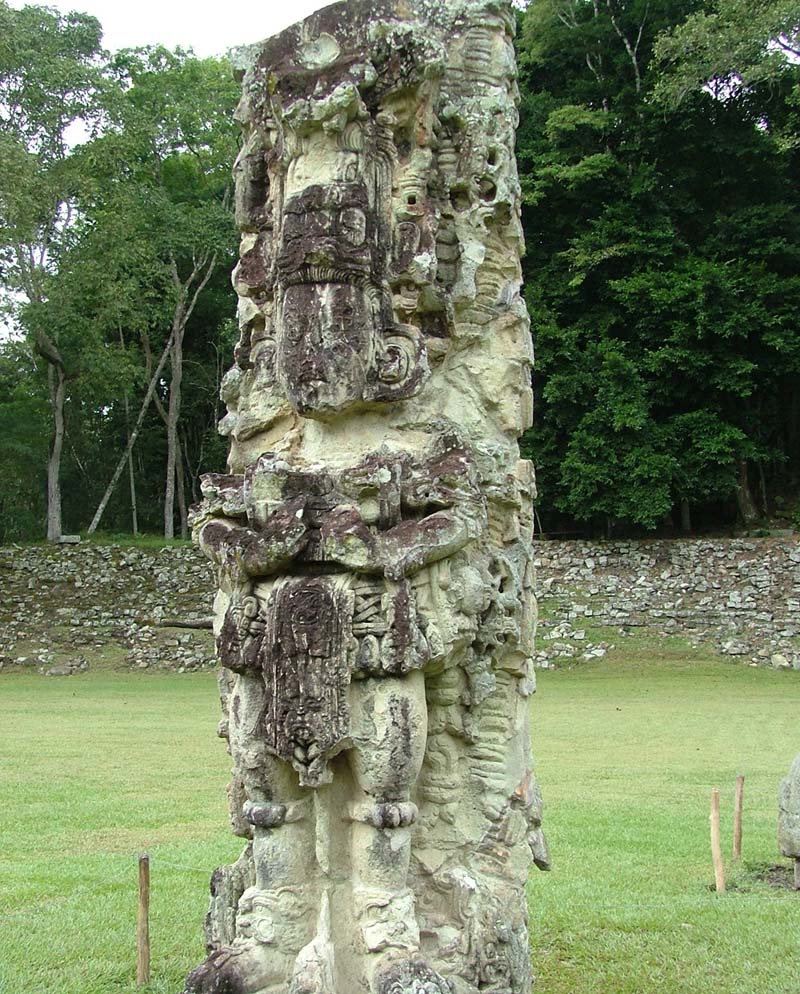
Stela 4: Dedicated September 13, 726 A.D. or 9.14.15.0.0 11 Ahau 18 Zac Maya longcount date
The iconographies of Stela F and Stela 4 are so closely related that they can only have been planned as a set. Their dedication dates are five years apart, and they share a particularly naturalistic, volumetric treatment of the figure that distinguishes them from the other five stelae and from any other stone sculptures created in the Classic Maya world.
Elizabeth Newsome, Trees of Paradise and Pillars of the World: The Serial Stela Cycle of "18-Rabbit-God K," King of Copan, p. 135
Stela 4 was badly damaged
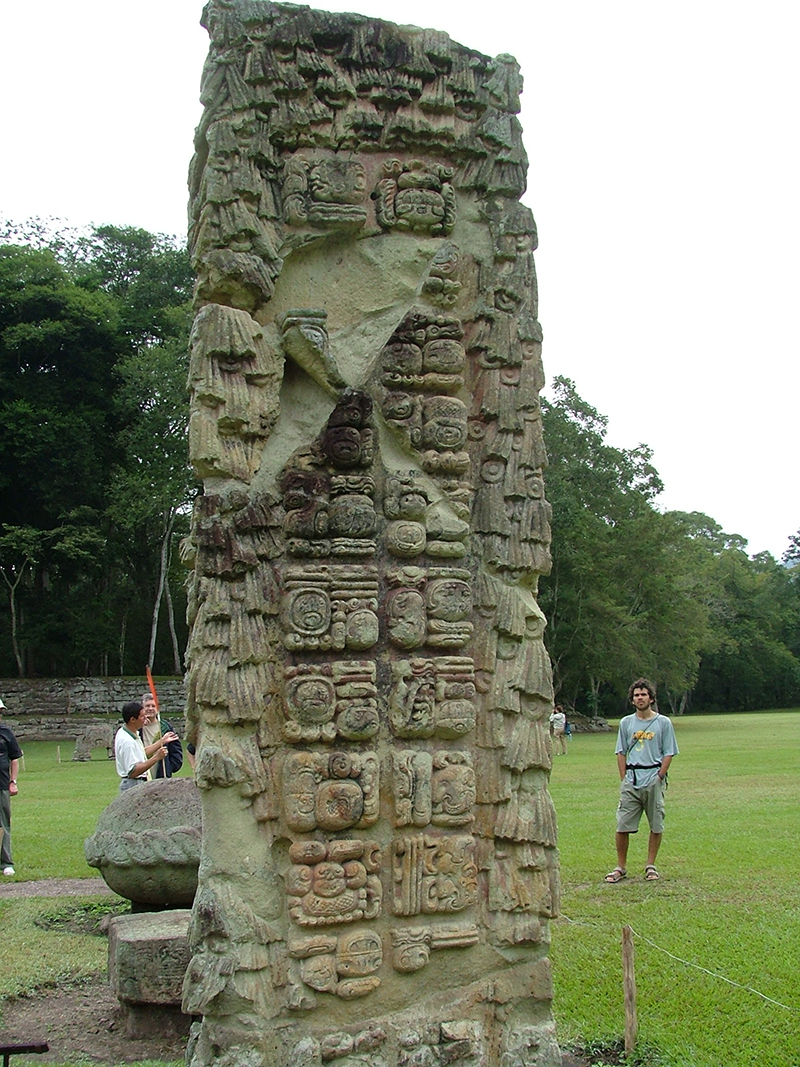
Stela 4: Dedicated September 13, 726 A.D. or 9.14.15.0.0 11 Ahau 18 Zac Maya longcount date
Stela 4, like Stela F, was reconstructed by Carnegie Project workers from an array of badly damaged fragments. The monument stands in the center of the western row of stelae aligned before the stairway of Temple 4 and faces east. The glyph pairs are read left to right, top to bottom.
Elizabeth Newsome, Trees of Paradise and Pillars of the World: The Serial Stela Cycle of "18-Rabbit-God K," King of Copan, p. 124
The name glyph of 18-Rabbit

Stela 4: Dedicated September 13, 726 A.D. or 9.14.15.0.0 11 Ahau 18 Zac Maya longcount date
This is the name glyph for 18-Rabbit-God-K, otherwise known as Waxaklahun-Ubah-K’awil. The left side of the glyph consists of the bar and dot notation for the number 18 (Waxaklahun), where bars represent the number five and dots represent one.
The rabbit “Ubah” (or gopher, as is now thought) is on the right, with the flaming axe of K’awil in his forehead. Note the remnants of red and yellow paint still clinging to the inscription.